

The global perfume market is valued at between $55.83 billion and $88.7 billion in 2026 and is forecast to reach $77 to $100 billion by 2032. Within that, the niche and indie fragrance segment is growing at 14.5% per year, currently worth $2.42 billion and accelerating. If you have been thinking about starting your own perfume brand, the timing has rarely been better.
But knowing the market is growing and knowing what actually to do next are two different things.
This guide walks you through every stage of starting a perfume business, from defining your niche to placing your first production order. It includes real budget figures, a packaging decision framework that no other guide covers in depth, and a practical checklist for finding the right supplier. Whether you are planning a lean launch under $10K or a fully branded professional debut, this is the roadmap to follow.
Is Now a Good Time to Start a Perfume Brand?
Yes. Direct-to-consumer selling, social commerce, and demand for niche and artisan fragrance have opened the door for independent founders. Buyers are moving away from mass-market department store scents and toward brands with identity, story, and a distinct aesthetic.
The opportunity is real. The failure point is execution.
Step 1: Define Your Niche and Target Customer
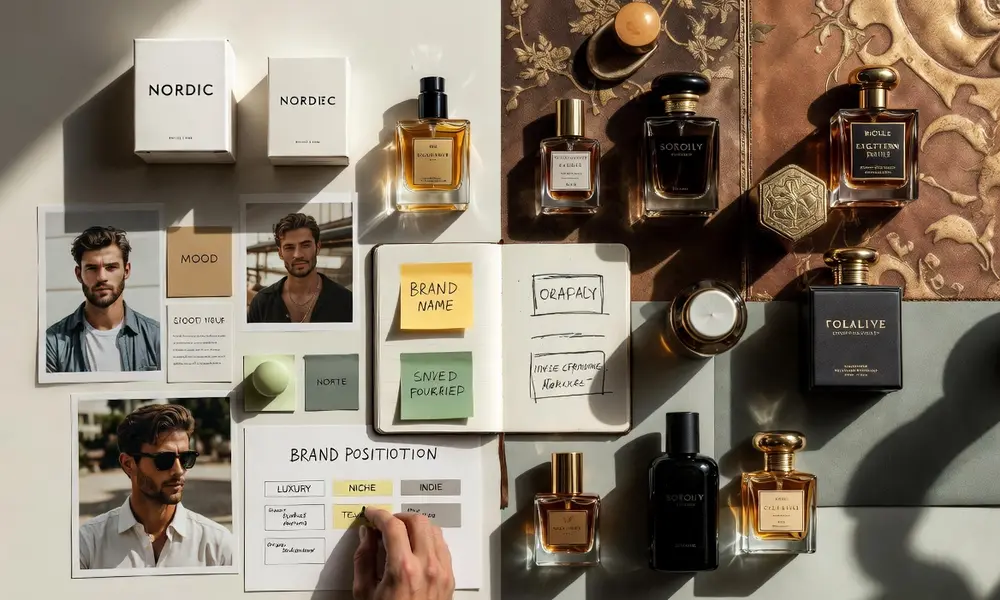
Before you think about notes or bottles, define exactly who the perfume is for.
A generic fragrance brand is forgettable. A specific one creates recognition.
Ask:
- Who is this for?
- What do they already wear?
- What is missing from their collection?
- What mood, lifestyle, or cultural reference does the brand own?
Luxury vs. Niche vs. Indie: Which Position Fits Your Brand?
Luxury
- Premium packaging
- High retail prices, usually $150+
- Exclusive distribution
- Strong margins, high upfront investment
Niche
- For fragrance enthusiasts
- Focus on composition, raw materials, and originality
- Buyers will inspect notes, perfumer credibility, and bottle design
Indie
- Most accessible entry point
- Founder-led storytelling and DTC sales
- More minimal packaging
- Typical pricing around $60 to $120
Your positioning shapes everything else, especially budget, packaging, and supplier choice.
Step 2: Understand Your Startup Costs
One of the most common questions from new founders is how much it actually costs to start a perfume brand. The honest answer is: it depends on your positioning and order size. But there are benchmarks you can plan around.
Realistic Budget Ranges for a First Launch
Cost category | Lean launch ($5K–$10K) | Professional launch ($15K–$25K) |
Fragrance development | $500–$2,000 | $3,000–$6,000 |
Packaging (bottles, caps, boxes) | $2,000–$4,000 | $6,000–$12,000 |
Branding and design | $500–$1,500 | $2,000–$5,000 |
Marketing and launch | $500–$2,500 | $4,000–$8,000 |
These ranges are grounded in figures cited across the industry. alphaaromatics estimates $8K to $10K for a 200-unit run. Parfumdigital cites $17K as a realistic minimum for a professional debut. loveeno references $10K to $25K as the typical founding range. Treat these as industry estimates rather than fixed figures.
Where Beginners Go Wrong
- Overworking the formula when a skilled perfumer or private label route would have been enough
- Cutting too hard on bottle and cap quality, then ending up with packaging that feels cheap at the target price point
Packaging is the first physical impression. Budget for it deliberately.
Step 3: Develop Your Fragrance
Your scent is the product. Everything else supports it.
DIY Formulation vs. Hiring a Perfumer vs. Private Label: Three development routes
DIY Formulation
- Full creative control
- Requires knowledge of raw materials, ratios, and safety compliance
- IFRA compliance testing is typically required
- Allow around 45 days of maceration before final evaluation
- Best for founders with chemistry or cosmetic formulation experience
Hire a Perfumer
- Best option for most serious launches
- The perfumer works from your brief and creates multiple iterations
- Helps produce a more original, market-ready scent
- Budget roughly $1,500 to $5,000 minimum for professional development
Private Label
- Fastest and cheapest route
- Choose from a manufacturer’s existing scent library
- Lower uniqueness, higher risk of looking like everyone else
- Usually not the best long-term base for a premium or niche brand
If you are new to the industry, understanding what a perfume designer actually does before briefing one will save time and improve the quality of your collaboration. For deeper work on top, middle, and base notes, use specialist perfumery resources and fragrance school material.
Step 4: Build Your Brand Identity
Perfume branding is sensory, emotional, and visual. Your name, bottle, cap, box, and color palette must feel like one system.
Brand Name, Logo, and Visual Language
Your name should be:
- Memorable
- Trademarkable
- Available as a domain
Run a trademark search before committing. If you plan to sell in the UAE or across the Middle East, register IP early. Problems are much cheaper to prevent than to fix.
Your visual language should match your positioning. A niche oudh brand for the Gulf market should not look like a minimalist Nordic fragrance house. Mixing identities creates confusion.
How Your Packaging Should Reflect Your Brand Story
Many founders treat packaging as the last step. That is a mistake.
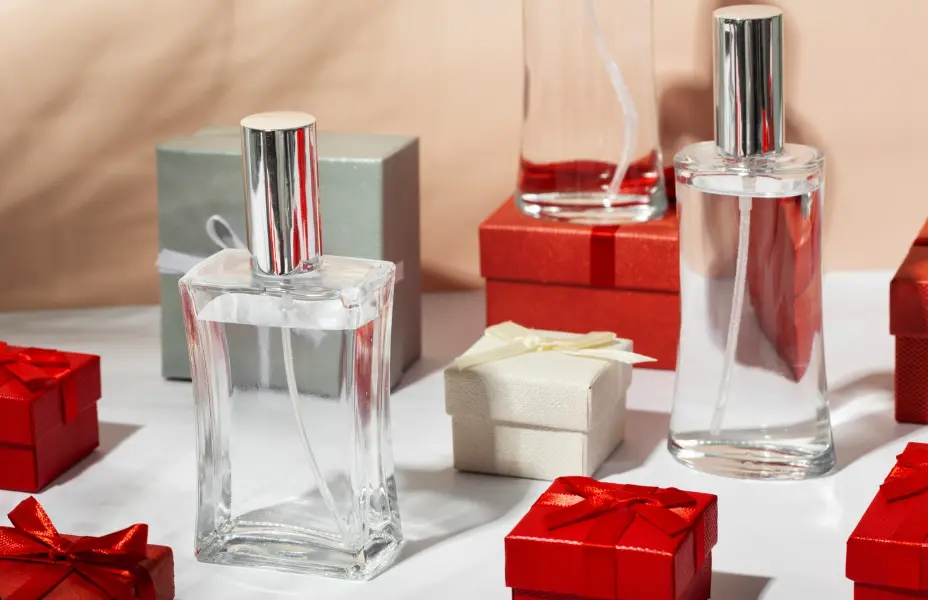
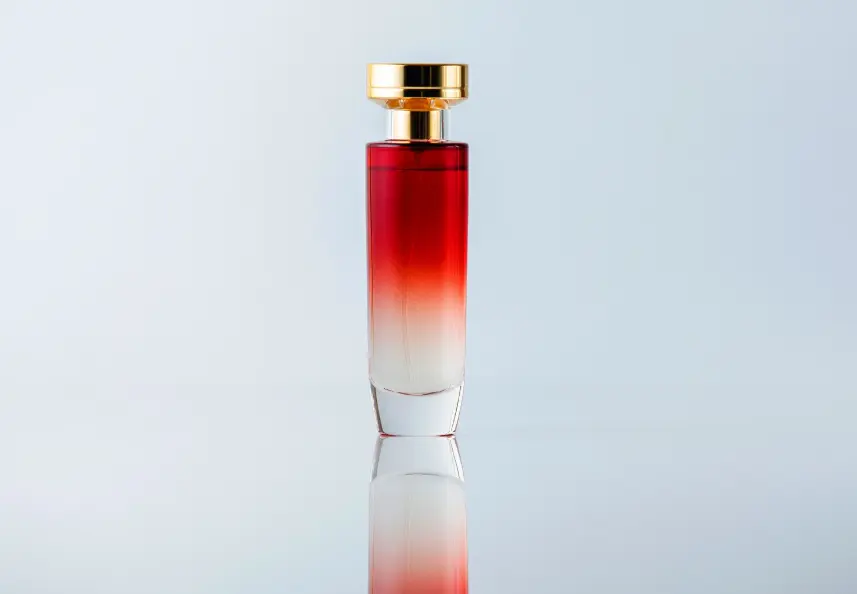
The bottle and cap are often the first things customers see, touch, and photograph. They are not decoration. They are part of the product promise.
Your packaging brief should answer:
- What mood should it communicate?
- What materials fit that mood?
- What does the weight of the bottle say about value?
Step 5: Choose Your Perfume Packaging, the Decision That Shapes Your Brand
This is the content gap most guides miss. Packaging is not a commodity decision. It is a brand decision with a budget consequence.
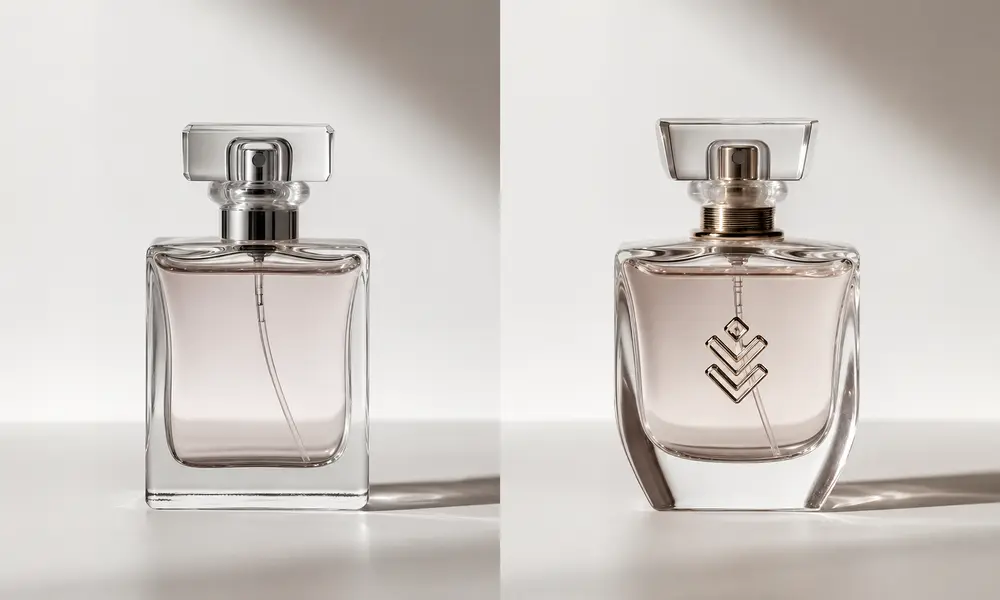
Custom Bottles vs. Stock Bottles: How to Decide
The right choice depends on budget, volume, and timeline.
Stock Bottles
- Available from supplier catalogs
- Usually requires 500 to 3,000 units MOQ
- No tooling or mold fee
- Best for first-time founders
- Let’s you test the market before committing harder
Custom Bottles
- Require a bespoke mold
- Mold cost usually runs from $3,000 to $10,000
- Often require 10,000 units or more
- Best after demand is validated and scale is proven
The practical framework: If your launch budget is under $10,000, start with stock bottles. For a full walkthrough on designing a perfume bottle that aligns with your brand aesthetic, from silhouette selection to finish choices, see our dedicated guide. If you are reordering and scaling, that is the time to evaluate a custom mold.
MOQ: What to Expect
Minimum order quantity is one of the first real constraints you will face.
- Stock bottles: often 500 to 1,000 units per design
- Custom glass molds: often 5,000 to 10,000 units or more
Some suppliers will flex on MOQ if you accept longer lead times or use in-stock inventory. Ask. If they refuse to discuss flexibility, they may not be the right partner.
Caps, Closures, and Sprayers
Caps are not minor details. They affect touch, weight, and perceived value.
Main cap materials
- Zamac: A zinc-based alloy that is the industry standard for premium fragrance caps. Heavy, polished, and available in a range of finishes. Used across luxury and niche brands.
- Aluminum: Lighter than Zamac, with strong customization potential. Commonly used in mid-range and contemporary brands.
- Wood: Warm, tactile, and increasingly popular in niche and natural fragrance positioning.
- Plastic (ABS or acrylic): The most cost-effective option. Works for lean launches but signals lower price positioning unless finished carefully.
Sprayer fit matters too. FEA 15mm and 15/415 are common collar sizes, and the bottle and sprayer must match correctly.
Packaging Cost Table: Budget Guide by Order Type
Packaging element | Stock (500–1,000 units) | Custom (5,000+ units) |
Glass bottle (per unit) | $1.50–$4.00 | $2.00–$6.00 |
Mold creation fee | None | $3,000–$10,000 (one-time) |
Cap (Zamac, per unit) | $0.80–$2.50 | $1.00–$3.50 |
Decoration (hot stamp, spray) | $0.30–$1.00 per unit | $0.30–$0.80 per unit |
Estimated first-order total | $2,000–$5,000 | $8,000–$25,000+ |
These are industry estimate ranges. Your actual cost depends on quantity, finish, decoration complexity, and supplier location. Request itemized quotes from at least three suppliers before committing.
Packaging for the Middle East Market: What to Know
If you are launching in the UAE, Saudi Arabia, or the wider Gulf region, packaging needs to match local expectations.
Middle Eastern fragrance culture values ornate presentation. Oud-forward and oriental scents often use:
- Heavier bottles
- Decorative Zamac caps
- Gold or black finishes
- Engraving
- Strong hand-feel and visual weight
MOQ norms may also differ by region. A supplier based in the UAE can reduce freight risk, speed up lead times, and better understand regional aesthetics.
Step 6: Handle Legalities and Compliance
Perfume is a creative business, but it is also regulated.
Business Registration, Trademarks, and Labeling
Requirements vary by market.
- UAE: trade license matched to your business activity
- US and UK: LLC or limited company is typical
- Trademark registration should happen early
- If you sell across borders, review the WIPO trademark system
Fragrance labeling must align with the rules of each market. In general, labels need:
- Ingredient disclosure where required
- Allergen disclosure above threshold levels
- Country of origin
- Manufacturer information
IFRA guidelines and, in Europe, EU Cosmetics Regulation are key reference points. Work with a perfumer or compliance specialist if you plan to sell in multiple territories.
Do You Need a Perfume License?
Usually no separate perfume license. In most markets, perfume is treated as a cosmetic, so you need to meet cosmetics and labeling rules instead. Check the requirements for every territory you plan to sell in.
Step 7: Set Up Production and Find Suppliers
Once your formula and packaging are set, production is a coordination problem.
You need to align:
- Fragrance manufacturer
- Packaging supplier
- Box printer
- Fulfillment or distribution partner
Expect the timeline from briefing to first product in hand to take 3 to 6 months. Sampling, revisions, quality checks, and shipping all take time. Do not build a launch plan that assumes first-pass perfection.
What to Look for in a Packaging Supplier
A good supplier should offer:
- Clear MOQ terms
- Samples before full commitment
- Written lead times
- Experience with fragrance brands
- Responsive account communication
Questions to Ask Before Placing Your First Order
- What is your sample policy, and what does it cost?
- What is the MOQ, and is there flexibility for a first order?
- What is the current lead time from order confirmation to shipment?
- What decoration options do you offer at my volume?
- What are your payment terms for first-time clients?
If answers are vague or slow, keep looking.
Step 8: Price Your Perfume Correctly
Pricing is where many new founders either leave margin on the table or price themselves out of the market.
The standard model is 3x to 5x COGS. COGS includes:
- Fragrance oil
- Bottle
- Cap
- Box
- Decoration
- Labeling
It does not include marketing, fulfillment, or overhead.
Example:
- If COGS is $8
- A 4x markup suggests a $32 retail price
If that does not fit your intended positioning, the issue is usually the cost structure or the target market, not the math.
Niche and luxury brands often sit in the $80 to $250 range, with higher margins and lower volume. Mass-market brands rely on tighter costs and bigger scale. Pick the model before you set the price.
Step 9: Launch and Market Your Brand
A finished product is not a launch. Visibility and trust drive sales.
Sales Channels: DTC, Boutiques, and Wholesale
DTC
- Highest margins
- Full brand control
- Direct access to customer data
- Requires content and ad spend
- Best starting point for most new brands
Boutiques and lifestyle stores
- Adds credibility and shelf presence
- Requires a press kit, sample set, and wholesale structure
- Typical boutique margin: 40% to 50%
Wholesale distributors
- Expands reach
- Compresses margins
- Reduces direct customer contact
- Better as a growth stage, not a first move
The launch asset most founders underinvest in
Professional photography.
Your bottle, cap, box, and lighting determine whether the brand reads as premium on a screen. If the visuals look cheap, customers assume the product is cheap.
The One Mistake Most New Perfume Brands Make
They treat packaging as a cost to minimize instead of an investment to get right.
Founders can spend months on fragrance development, naming, and positioning, then choose the cheapest bottle available. That breaks the brand.
Packaging is the physical expression of your concept:
- The weight in the hand
- The click of the cap
- The clarity of the glass
- The first object customers photograph and share
If you get the bottle wrong, the launch suffers.