

There’s a moment in every fragrance buyer’s journey that happens before they smell anything.
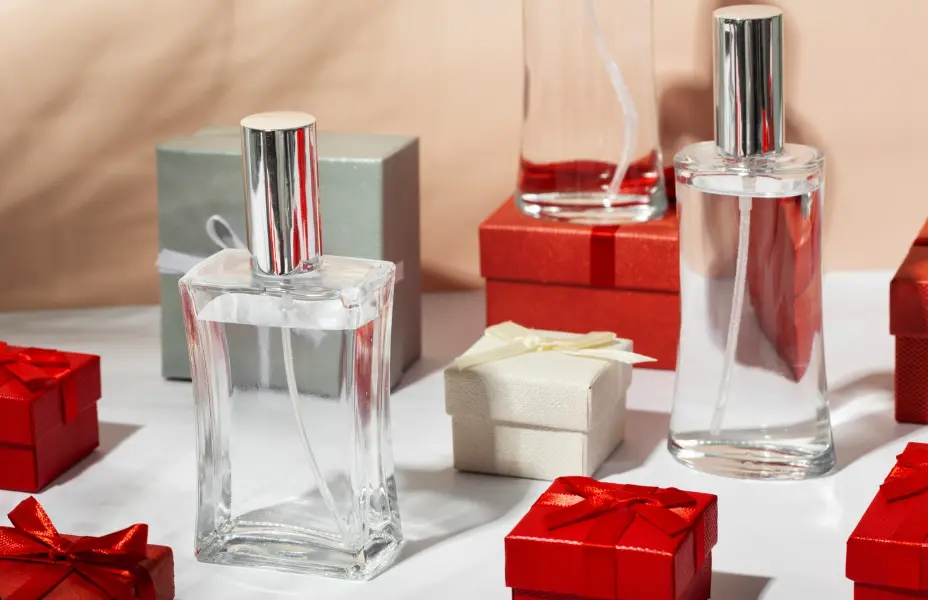
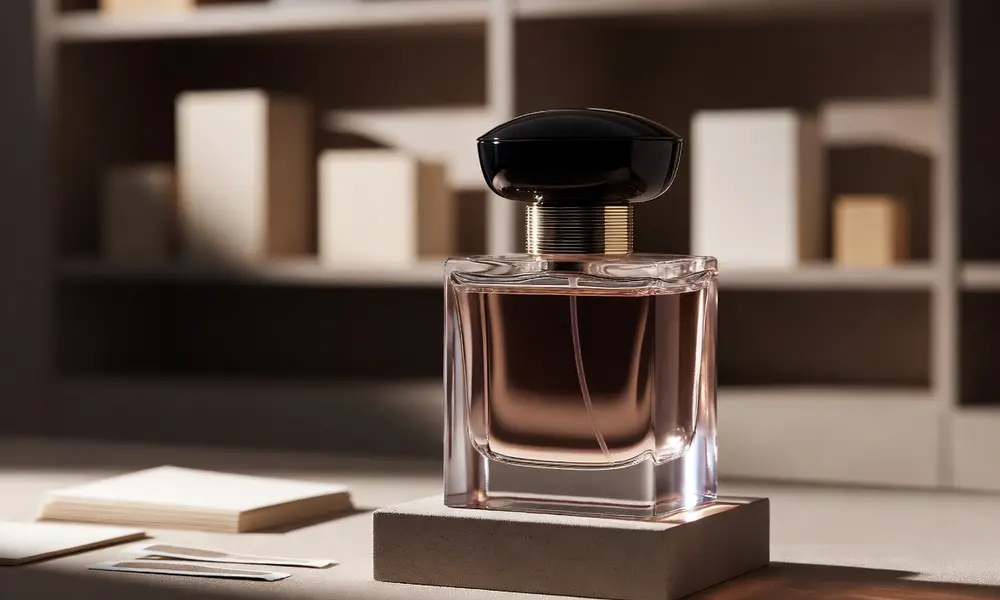
They see the bottle.
In seconds, they decide whether the fragrance feels luxurious, modern, artistic, playful, or forgettable. The bottle shapes expectations before the scent ever touches skin.
That’s why perfume bottle design is far more than packaging. It’s branding, psychology, and marketing combined into one object.
If you’re launching a fragrance brand or developing a new scent, this guide will help you design a perfume bottle that stands out visually, feels aligned with your brand, and performs well both online and in retail.
Why Your Perfume Bottle Is Your Brand's First Sales Tool
The bottle communicates what the fragrance is before it is opened. Consumers decide in under 7 seconds whether to pick it up.
That is not a metaphor. It is a buying behavior reality that every fragrance brand needs to build around.
Packaging influences over 68% of fragrance purchase decisions, according to research cited by Loveeno. The bottle is your brand’s physical ambassador, whether it sits on a retail shelf or appears in a flat-lay Instagram photo. Both contexts matter equally in 2026. A brand targeting younger buyers cannot afford to treat shelf presence and social media photography as separate concerns.
There is also a perception problem that no amount of marketing can correct. A poorly designed bottle reads as a low-quality fragrance, regardless of what is inside. The consumer never gets close enough to find out.
That is why the perfume bottle design process must start before you pick a shape.
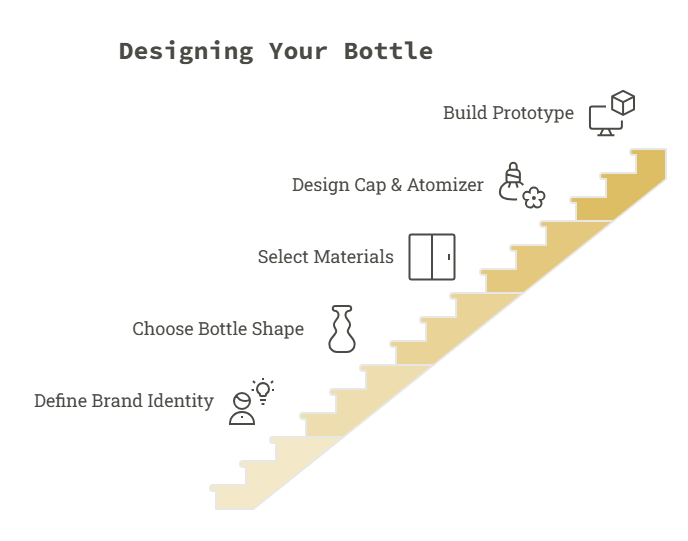
How to Design Your Bottle: 5 Simple Steps
Designing a bottle that stands out follows a clear sequence. Skipping steps early creates expensive problems at the manufacturing stage.
Step 1: Define Your Brand Identity and Fragrance Concept
The bottle must be an extension of the fragrance’s story, which is why the role of a perfume designer matters early in development. It is not a separate decision made after the scent is finalized.
Before sketching anything, answer these four questions:
- Who is the target customer?
- What price tier does the product occupy: mass, niche, or luxury?
- Where will it be sold, whether retail shelf, boutique, or e-commerce?
- What emotion should the bottle trigger at first glance?
The answers shape everything that follows. A minimalist eau de parfum targeting Gen Z requires different visual language than a heritage oud for premium retail. If you have not answered these questions clearly, no amount of beautiful 3D renders will fix the positioning confusion later.
Step 2: Choose a Bottle Shape That Reflects Your Positioning
Shape is the primary visual signal. It sets the brand category before any text is read.
Shape Category | What It Signals |
Geometric / angular | Niche, avant-garde, fashion-forward |
Rounded / soft curves | Feminine, approachable, mass-market friendly |
Sculptural / architectural | Luxury, collectible, art-object positioning |
Classic rectangular or cylindrical | Heritage, trust, versatility |
The decision rule is simple: the shape should feel like a logical physical extension of the scent profile and brand tone. If the scent is warm and intimate, a cold, angular silhouette creates dissonance.
One practical note. Custom shapes require mold development, which adds cost and lead time. Standard shapes reduce both. At Olila Package, custom bottle shapes start with a shape brief and move through 3D render review before any tooling commitment.
Step 3: Select Materials and Finishes
Material choice directly determines perceived quality, production cost, and shelf durability.
Glass remains the premium default. Heavier glass signals a higher value. The finish tells its own story:
- Frosted or matte glass signals understated luxury, the standard in niche markets
- Clear glass builds transparency and trust, and works across price tiers
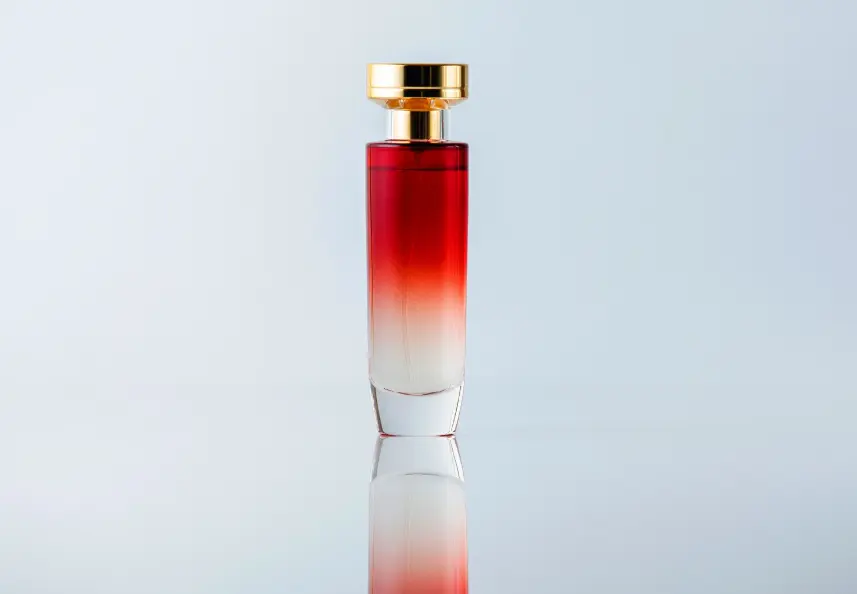
- Colored glass creates strong brand differentiation, though it is harder to execute cheaply
Cap materials carry equal weight. Zamac, a metal alloy, delivers the luxury weight and feel that premium brands rely on. Plastic works for cost efficiency. Wood or resin positions the bottle in artisan or eco-conscious territory.
Finish options include laser engraving, silk-screen printing, hot stamping, and metallic coating. Each adds cost, but each also adds perceived value when applied with restraint.
Worth noting: recycled glass and refillable bottle formats are growing fast. For brands with eco-conscious positioning, these are no longer niche options. They are increasingly expected.
Step 4: Design the Cap, Collar, and Atomizer
The cap is handled more than any other component. It must feel right.
Cap weight is one of the most underestimated quality signals in fragrance packaging. A heavy Zamac cap communicates premium to the hand before the nose ever gets involved.
The atomizer (the pump mechanism) must be matched precisely to the bottle neck diameter. A mismatch causes leakage or poor spray performance. Both outcomes destroy the unboxing experience and generate returns.
The collar or neck ring adds a finishing visual detail between the bottle body and cap. It is a small component that makes a clear difference in how polished the final product looks.
The most common first-timer mistake: finalizing bottle design without confirming atomizer compatibility. Fix this early.
Step 5: Build a 3D Prototype Before Committing to Production
3D renders confirm proportions and visual identity before any physical cost is incurred. But they do not tell you everything.
Physical 3D-printed prototypes reveal ergonomic issues that renders cannot. Always test with a filled bottle at actual weight. Balance shifts with liquid, and a bottle that looks elegant in renders can feel awkward in hand at 100ml.
The cost reality: mold development for custom glass bottles typically requires a one-time investment of $3,000 to $10,000 or more. Prototyping eliminates costly mold revisions. Minimum order quantities for custom glass typically start at 3,000 to 10,000 units, so confirming design complexity before tooling is not optional.
What Makes a Perfume Bottle Design Stand Out in 2026
Standout bottle design in 2026 balances aesthetic clarity with material craftsmanship. Trend-chasing without brand fit creates confusion, not differentiation.
These are the current design directions worth understanding, not blindly copying:
- Minimalist luxury. Clean lines, heavy glass, no excess decoration. Le Labo and Maison Margiela are the reference points here.
- Sculptural and collectible. Bottles designed as objects first, packaging second.
- Sustainable positioning. Refillable formats, recycled glass, minimal secondary packaging. Growing fastest among niche and indie brands.
- Vintage revival. Art Deco geometry and atomizer-style caps are resurging, particularly for heritage-positioned products.
- Bold color. Single-color opaque glass as a brand signature. Simple to identify, hard to copy cheaply.
The decisive question for each trend: does it serve your brand, or is it borrowed identity?
A standout design is not the most complex one. It is the most coherent one.
What Are The Common Perfume Bottle Design Mistakes?
Most design mistakes happen when aesthetics and production realities are treated as separate conversations.
- Finalizing a shape without checking manufacturing feasibility. What renders beautifully does not always translate to a moldable glass form. Check with your manufacturer before falling in love with a concept.
- Choosing a cap that does not fit the atomizer thread. This causes leaks, poor spray performance, and costly rework. It is also entirely preventable.
- Designing for renders, not for hands. Ergonomics matter. A bottle that photographs well but feels unbalanced or slippery loses at the point of use.
- Over-decorating at the expense of shelf clarity. A busy bottle disappears from a distance. Restraint is a competitive advantage on a crowded shelf.
- Ignoring label placement geometry. Curved and irregular surfaces limit printable area. Design the bottle and the label as one system, not two separate decisions.
- Skipping pilot sample review before full production. No render or prototype fully replicates final production materials, colors, and finishes. A pilot sample review catches problems before they become 10,000-unit problems.
How the Olila Package Helps You Create a Bottle That Actually Stands Out
Olila Package offers custom bottle design support, material selection guidance, supplier coordination, and sampling management. The process is collaborative. The design brief is built together, not handed over as a spec sheet.
This works for new fragrance brands starting from scratch and for established brands refreshing their fragrance packaging. Either way, the goal is the same: a bottle that does its job on the shelf and in the hand.
Ready to get started? Begin with a design brief consultation.