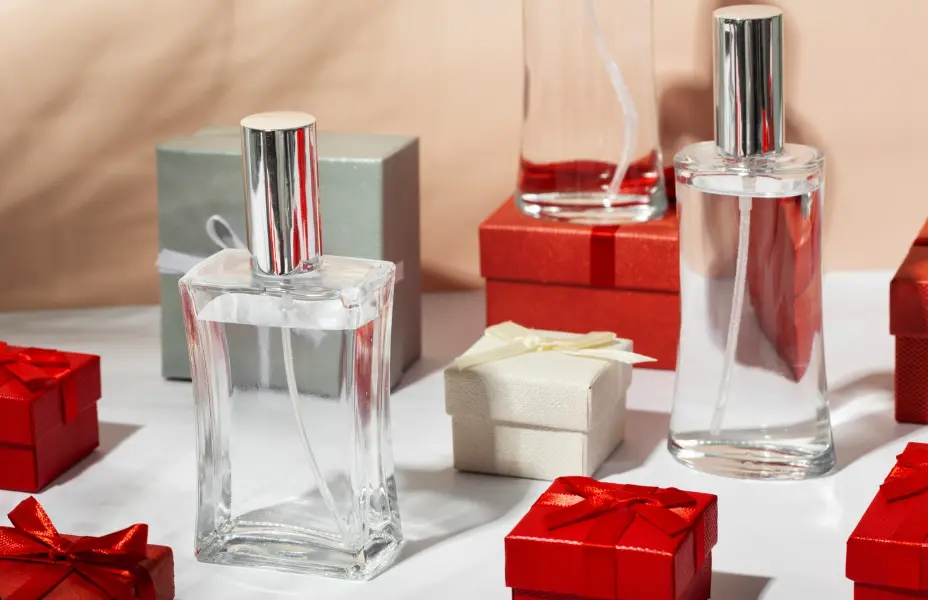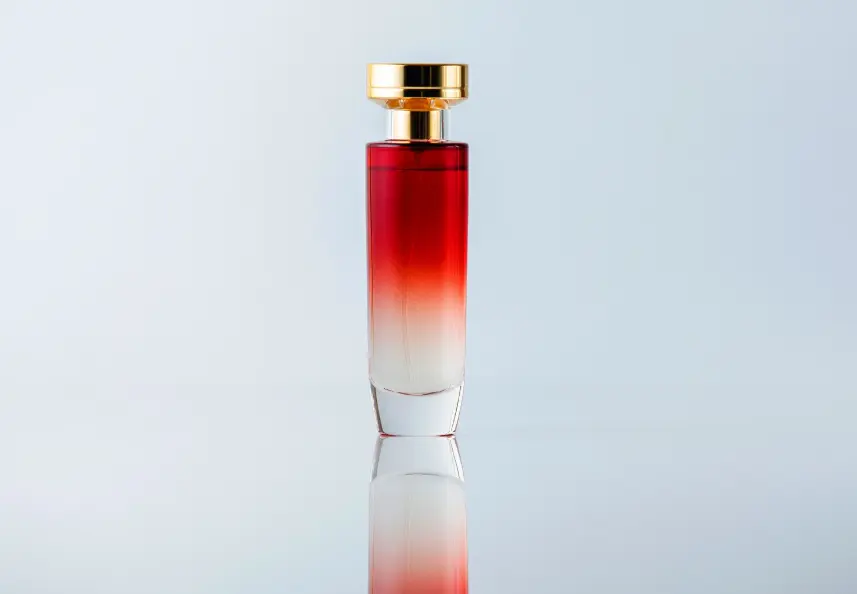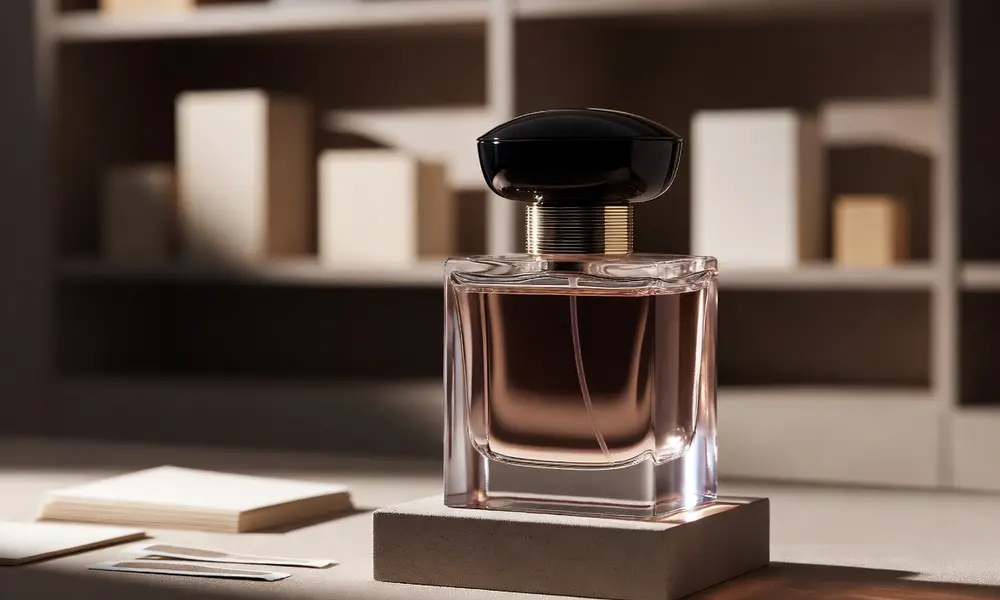


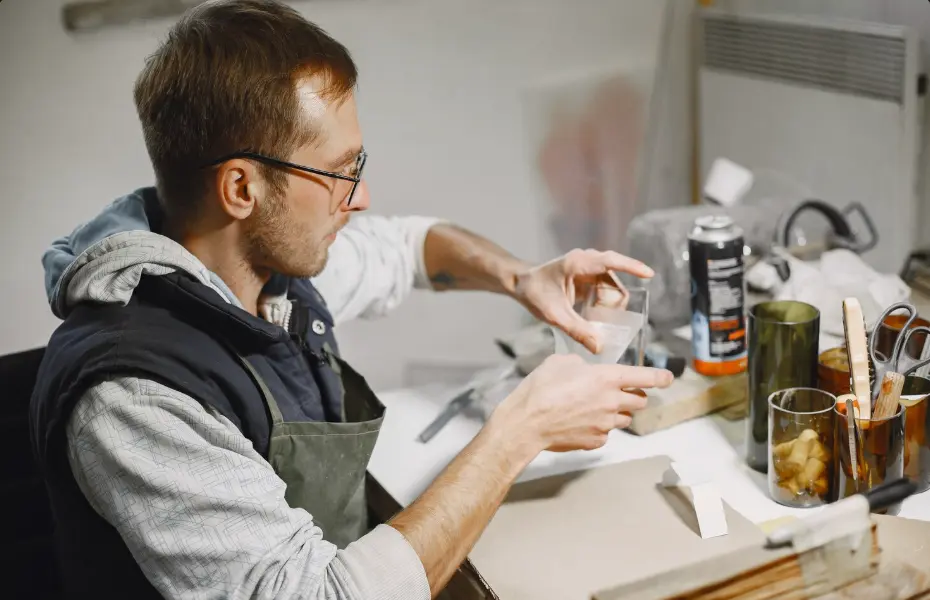
The bottle costs $200. The scent inside took two years to build. Someone spent those two years translating a client’s poetic brief into a finished formula, molecule by molecule. That person is a perfume designer.
Here is what this article covers:
- The difference between a perfume designer and a “nose.”
- The actual day-to-day workflow, from brief to bottle
- The tools, ingredients, and working environment
- How someone trains to do this, and how long it actually takes
- The skills the job demands in 2026
- How packaging partners like Olila Package fit into the fragrance creation process
- What a perfume designer earns
What Is a Perfume Designer?
A perfume designer is an artist and scientist who builds scent compositions from raw aromatic compounds, both natural and synthetic, and turns abstract creative ideas into formulas that hold together on skin.
The term “nose” (nez in French) gets used interchangeably with perfumer, but they are not identical. A perfumer creates fragrance compositions. A nose evaluates and quality-checks them. Senior perfumers at large fragrance houses often do both, but the distinction matters in a professional context.
The global fragrance industry is dominated by a small number of ingredient suppliers. Houses like Givaudan, IFF, Firmenich, and Symrise employ hundreds of perfumers collectively. These houses are the ones actually building the scents that end up under luxury brand names.
Most people assume Chanel No. 5 came from Coco Chanel. It came from Ernest Beaux, a perfumer at the time. The brand got the credit. The nose got the paycheck. That dynamic defined the industry for most of the twentieth century, until Frédéric Malle became the first brand (in 2000) to put perfumers’ names on the bottle itself, shifting how the profession is perceived.
What Does a Perfume Designer Actually Do?
This is the part most articles skip. They define the role, mention a few ingredients, and move on. What actually happens between the brief and the finished bottle is where the real work lives.
Receiving the brief
A fashion house, beauty brand, or retailer sends a creative brief. These are often written in poetic, emotional language. “The feeling of wet concrete after summer rain.” “A weekend house in the south of France.” The perfumer’s first job is to decode that language into chemistry.
This is harder than it sounds. You are not just choosing ingredients that smell good. You are choosing ingredients that collectively produce an emotional effect the client has described in words that have nothing to do with chemistry.
Ingredient selection
Professional perfumers work with a palette of 3,000 or more aromatic raw materials. Naturals include rose absolute, oud, vetiver, and jasmine sambac. Synthetics include materials like iso e super, ambroxan, and hedione. Each one behaves differently at different concentrations and interacts differently with other materials in a blend.
The classic structure of a fragrance separates into top notes (what you smell first, often citrus or green), heart notes (the character that emerges after 30 minutes), and base notes (the dry-down that lingers on skin for hours, usually woods or musks). Building all three layers to work in harmony is where the craft sits.
Blending and iteration
The perfumer builds trial compositions and evaluates them repeatedly. This cycle is not a short one. A single fragrance can go through 200 or more versions before the client is satisfied. Most of those versions will never be seen by anyone outside the lab.
The iterations are not random. Each one tests a specific hypothesis: what happens if we push the ambroxan higher? What if we add a synthetic musk to extend the dry-down? What if we drop the citrus top entirely?
Consumer and panel testing
Once the perfumer has developed a viable submission, it goes to the client. Clients typically run panel tests, sometimes involving hundreds of consumers who evaluate the fragrance blind. Feedback comes back. The perfumer adjusts.
This is where the creative process collides with commercial reality. A formula the perfumer considers finished might score poorly with a test panel in a specific market. The revisions start again.
Regulatory compliance
Every commercial fragrance must comply with IFRA (International Fragrance Association) guidelines. IFRA restricts or bans certain ingredients based on safety and allergen data. Some beloved naturals, like oakmoss, have strict limits because of sensitization risk. Working within these limits while preserving the intended character of a fragrance requires real technical skill.
Finalization and handoff
Once the formula is approved, it is locked. Production scaling begins. The formula moves from a lab bench to a manufacturing facility where it will be produced in bulk. From that point, the perfumer’s work is done.
A typical fragrance development cycle runs from 6 months to 3 years. Complex fine fragrances for major luxury houses often take longer.
What Tools and Ingredients a Perfume Designer Uses?
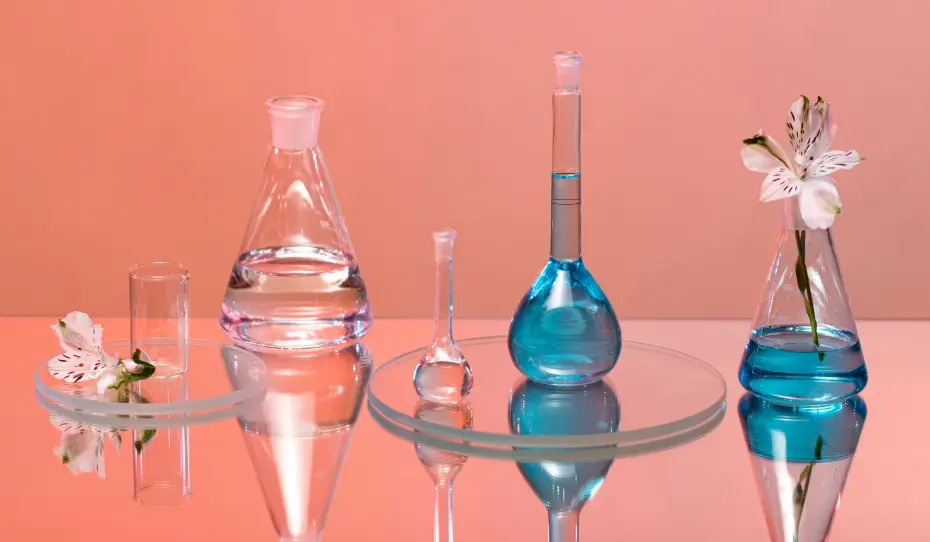
The perfumer’s workstation is called the “organ.” It is a tiered structure holding hundreds of raw materials arranged by olfactive families: florals, woods, musks, resins, citruses, spices, fougeres. It is the instrument the perfumer plays.
Natural ingredients form one side of the palette. Florals like rose absolute and ylang ylang. Woody materials like sandalwood, vetiver, and cedarwood. Animal-origin materials, though most have been replaced with synthetics for ethical and supply reasons.
Synthetic aroma chemicals form the other side. These are not “fake” ingredients. Many are more stable, more sustainable, and more precise than naturals. Ambroxan, for example, is a synthetic that mimics the dry-down warmth of ambergris without the ethical issues. Iso e super creates a woody, cedar-like texture that naturals struggle to replicate at scale.
Analytical tools are part of the process too. Gas chromatography and mass spectrometry (GC/MS) allow perfumers to break down and analyze scent compositions at the molecular level. This is used in quality control, reformulation, and reverse-engineering work.
AI-assisted formulation software entered the process in 2026, with tools that suggest ingredient pairings based on historical formula data and consumer preference patterns. Whether that meaningfully accelerates creativity is debated in the industry. Most working perfumers treat it as a reference tool, not a creative engine.
For brands building a fragrance from scratch, understanding the perfumer’s palette and process helps you write better briefs and make faster decisions during the iteration cycle.
How Does Someone Become a Perfume Designer?
There is no single path. But there are three main routes, and they vary significantly in access, cost, and outcome.
The apprenticeship route is the traditional one. A junior candidate joins a major fragrance house and trains under a senior perfumer for three to five years. Entry is rare and competitive. Most major houses have their own internal schools (Givaudan’s is employee-only). This route produces the most technically rigorous perfumers, but the doors are narrow.
Formal education is the more accessible route. ISIPCA, founded in 1970 in Versailles, is widely regarded as the world’s first dedicated perfumery school. The Grasse Institute of Perfumery (GIP), established in 2002, trains students in the historic fragrance capital of France. Both programs typically require a chemistry or pharmacy background, plus an olfactory intelligence assessment, to enter.
The independent route has grown considerably. Online courses, workshops, and direct ingredient sourcing have allowed self-trained perfumers to build viable niche brands without institutional backing. This route favors creative speed over technical depth, but in the niche fragrance segment specifically, that trade-off works.
Regardless of route, the foundational requirement is the same: memorizing 2,000 to 3,000 raw materials by scent, understanding how each one behaves across concentrations, and building an instinct for how they interact. That process takes years. Most perfumers train between three and ten years before creating commercially viable fragrances independently.

What Skills Does a Perfume Designer Need?
Olfactory memory is the obvious one, but it is also the most misunderstood. It is not just the ability to identify a scent. It is the ability to recall how a raw material smelled six months ago, at a different concentration, in a different formula context, and compare it accurately to what you are smelling now. That level of memory precision takes years to develop.
Chemistry knowledge matters. Understanding how molecules interact, how they break down over time, and how they behave on different skin types directly affects formula stability. A perfumer who cannot read a formula and anticipate its behavior on skin is working with one hand behind their back.
Client communication is a skill that gets overlooked. A significant part of the job is translating between creative language and technical reality. The client says, “warmer.” The perfumer must decide whether that means more musks, deeper woods, or a shift in the base note structure. Getting that translation wrong costs weeks.
Trend awareness matters more than many realize. Fragrance aesthetics cycle like fashion. In 2026, demand for transparent sourcing, sustainable ingredients, and “clean” formulation has reshaped what clients expect. A perfumer who ignores those signals will lose briefs to ones who don’t.
IFRA compliance knowledge is not optional. It is a prerequisite. Submitting a formula that violates ingredient restrictions wastes everyone’s time and signals amateurism to the client.
How Olila Package Works with Perfume Designers to Bring Scents to Life
The formula is half the product. The packaging is the other half.
A finished fragrance needs a container that protects the formula from light and temperature degradation, communicates the brand’s identity at a glance, and creates the first emotional impression before a single molecule reaches the nose.
Olila Package works with brands and creators at exactly that juncture. The perfumer builds the soul of the product. The bottle you design around it creates the first impression the consumer actually experiences.
When the packaging and the fragrance are developed with shared intent, the product coheres. When they are not, even an excellent formula can feel generic at the point of sale. The alignment between the scent’s emotional story and its physical container is what separates a forgettable perfume from one people remember.
What Does a Perfume Designer Earn?
Junior perfumers at fragrance houses typically earn between $45,000 and $65,000 USD per year. Senior and master perfumers at top-tier houses command $100,000 to $200,000 or more. These figures align with data from the U.S. Bureau of Labor Statistics for chemists and materials scientists in specialized manufacturing roles, though dedicated perfumer salary data from the BLS is not broken out separately.
Independent niche perfumers’ income varies dramatically based on brand scale, distribution, and retail pricing. The most celebrated master perfumers in the industry, figures like Alberto Morillas and Francis Kurkdjian, have career portfolios spanning hundreds of commercial fragrances and command compensation well beyond those ranges.
The ceiling in this profession is high. Getting there takes a decade or more.
Perfume design is one of the few professions where creative imagination and analytical chemistry must operate at the same level, simultaneously. Every scent you wear started as someone’s abstract brief, passed through hundreds of iterations, survived regulatory review, and was scaled into production before it reached your skin. Knowing what that process actually involves changes how you look at a bottle and the broader luxury perfume packaging experience surrounding it.
Whether you are exploring this as a career, sourcing a creative partner, or building a fragrance brand, knowing who builds the scent is where the process starts.